Partner, Portfolio Manager
A quick sidebar, Investment Insights is now available on Substack for an even more convenient way to stay up to date on our latest commentary. Read the end of today’s edition for more details.
Looking at markets, one of the themes we highlighted in our Q1 Market Outlook Webinar was how challenging it can be to trade around geopolitical or headline-driven risk. That dynamic was clearly illustrated over the past weekend and into this week’s trading session, which saw sharp moves in both the oil and equity markets.
Sunday night’s futures trade into Monday afternoon highlights this point. Sunday evening, oil futures surged 30%, briefly approaching $120 per barrel, its highest level since 2022, while Dow futures fell more than 1,000 points as global investors braced for the possibility of a prolonged conflict with Iran and the potential closure of the Strait of Hormuz.
Why Does The Strait of Hormuz Matter?
A vitally important global shipping lane, the Strait of Hormuz is the only route that stretches from the Persian Gulf to an open ocean, making it the primary export route for energy supplies from the Gulf region.The Strait transports roughly 20% of the world’s crude oil supply. It is also a key route for approximately 16% of the ammonia, urea, and nitrogen used in global fertilizer production, as well as 25–35% of the helium required for manufacturing semiconductor chips.
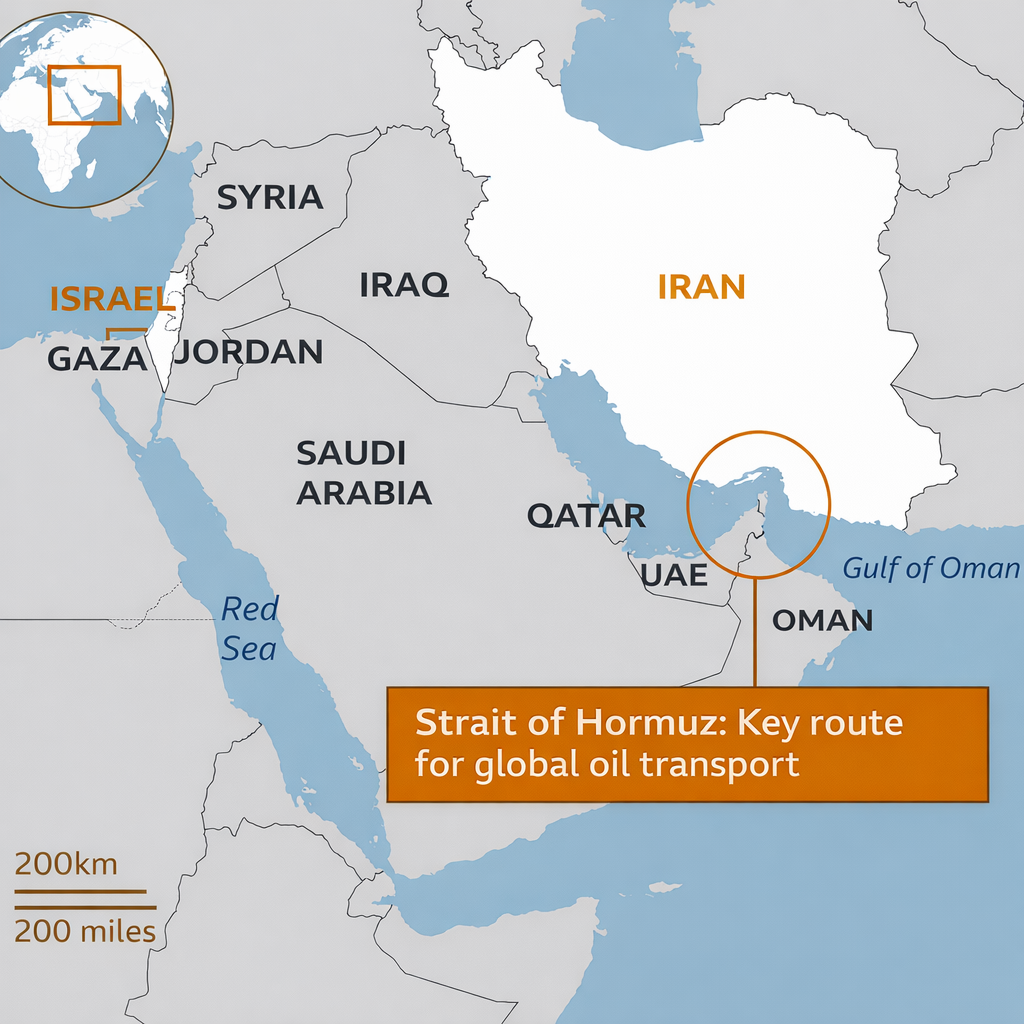
The majority of the oil that passes through the Strait of Hormuz is destined for Asian markets, with China receiving approximately 5 million barrels a day and India about 2 million barrels, according to the US Energy Information Administration.
Because of this logistical significance, even a short-term disruption or bottleneck in the Strait can have ripple effects across multiple industries and economies worldwide.
Headline Risk Directing Market Moves
Sunday night’s dramatic sell-off proved to be short-lived. Less than 24 hours later, oil was trading around $85 a barrel, the Dow closed Monday up 239 points, and the S&P 500 was up nearly 1% after President Trump told CBS News, “I think the war is very complete, pretty much.”Markets remained choppy throughout the trading week as Iran pressed attacks on transport ships through the Strait, while the US and its allies evaluated contingency plans to address any potential short-term oil supply shocks.
At Thursday’s close, oil was back up to more than $96 a barrel, while the S&P 500 and Dow Jones Industrial Average were down roughly 1% and 1.7% on the week, respectively.
While we view these market moves as extremes, they also highlight how quickly the modern 24-hour news cycle can shape, and quickly change, investment narratives. It also highlights how difficult it can be to successfully trade through geopolitical or headline risk.
What Does This Tell Us As Investors?
First, the Strait of Hormuz matters, it is a critical logistical global shipping route. Any disruptions or bottlenecks in the Strait can generate supply and price shocks across the supply chain of a host of industries, including energy, agriculture, technology and more. These ripple effects can ultimately be felt throughout the broader global economy, influencing everything from fuel costs and fertilizer prices to semiconductor production.Second, these events serve as a reminder of how quickly markets try to react to geopolitical developments in today’s 24-hour news cycle. Information travels instantly, and markets often respond just as fast. Initial reactions to geopolitical headlines frequently produce sharp, emotional market moves as investors attempt to price in worst-case scenarios before the full facts are known.
For investors, this dynamic reinforces one of the most important principles of long-term investing: volatility is a normal part of the market cycle. We also caution that markets have a tendency to “shoot first and ask questions later,” only to recalibrate once more information becomes available.
Finally, diversification is imperative. Investing in markets that steadily rise can feel easy, but the real test comes during periods of volatility. Building portfolios that can participate in market upside while also providing meaningful downside protection is far more difficult.
This requires discipline, prudence, and a long-term perspective. Prudent investors understand that true diversification, when properly aligned with a given risk tolerance, must be implemented proactively and maintained with patience over time. Attempting to recalibrate asset allocations, cash reserves, or equity sector exposures during periods of market volatility is often fraught with difficulty and frequently leads to sub-optimal long-term investment outcomes.
Final Thoughts
We do not claim to have an infallible crystal ball when it comes to geopolitical developments or headline risk. We don’t profess to know what will happen tomorrow, next week, or next month. However, what we can assure our clients is that our investment approach remains grounded in discipline, diversification, and a focus on long-term fundamentals rather than reactionary short-term moves.Join Us On Substack
Substack is our new hub for Investment Insights where you can easily read previous editions, all in one place.If you are familiar with Substack and prefer to receive in-app mobile notifications and emails when the latest edition is published, please “Subscribe” here.
If you enjoy reading Insights on a computer or tablet, we recommend bookmarking our Substack website for an easier, more convenient experience. No more email searching required. All editions are available on the website.
We’re here to help with any questions you may have!